Home › Cutting board plans
Cutting board plans: a great first project
Reviewed 30 August 2026 · how we research
A cutting board is the classic first build - cheap, quick, and it teaches flat glue-ups, sanding, and finishing. The plan mostly needs to get the glue-up and the wood choice right.
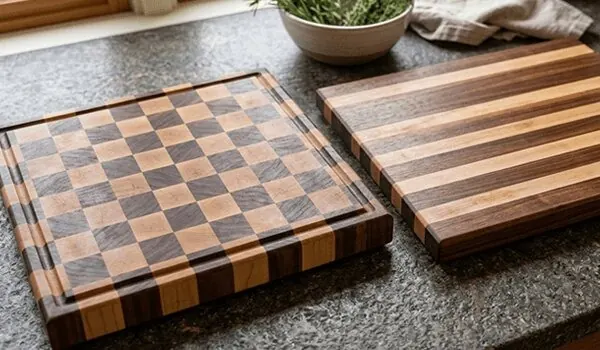
What to expect
An afternoon plus finishing time. Milling stock flat and square, a clamped glue-up, sanding through grits, and an oil finish.
What a good cutting board plan plan includes
- An edge-grain layout (simplest) or an end-grain layout with the two-glue-up sequence spelled out
- A waterproof, food-safe glue specified (Type II or Type III PVA)
- Close-grained hardwoods only - maple, walnut, cherry, beech - and species to avoid
- A chamfer or round-over on all edges, and optional feet or a juice groove
- A finishing routine: food-safe mineral oil or a mineral-oil/beeswax paste, multiple coats
Key considerations
- End-grain boards are easier on knives but need a second glue-up and careful flattening - start with edge grain.
- Never use ordinary wood glue or a film finish like polyurethane on a working board.
- Avoid oily exotics and open-pored woods like red oak for boards used with raw food.
Cutting board plans is one category in the Ted's Woodworking library. Match any plan to the points above, whatever the source, and check the cutting list before buying materials. Our review covers how that library holds up overall.
FAQ
Is edge grain or end grain better for a cutting board?
End grain is gentler on knife edges and hides cuts, but needs two glue-ups and careful flattening. Edge grain is simpler, cheaper, and perfectly good to start with.
What glue is safe for a cutting board?
A waterproof PVA rated Type II or Type III. Once cured it is inert and food-safe. Do not use standard interior wood glue.
What finish should I use on a cutting board?
Food-safe mineral oil, or a mineral-oil and beeswax paste. Apply several coats, let each soak in, and re-oil periodically. Avoid film finishes.
What wood is safe for a cutting board?
Close-grained hardwoods: maple, walnut, cherry, beech. Avoid open-pored woods like red oak and oily exotics for boards used with raw food.
How thick should a cutting board be?
Around 1 to 1.5 inches for an edge-grain board, thicker for end grain so it stays flat.
How do I keep a cutting board from warping?
Alternate the growth rings in the glue-up, finish all faces evenly, and re-oil both sides.
How do I care for a wooden cutting board?
Hand wash, dry upright, and re-oil when it looks dry. Never put it in the dishwasher.
Can I put a juice groove or feet on it?
Yes. A router does the groove, and small feet or a chamfer help it dry and stay put.
Is a cutting board a good beginner project?
Yes. It is the classic first build and teaches flat glue-ups, sanding, and finishing.
How long does a cutting board take?
An afternoon of work plus a day or two for the oil coats to soak in.
More: Beginner projects · Projects that sell · The plan library
Want to see what the bundle includes?
One-time payment advertised at $67, with a 60-day money-back guarantee through ClickBank. Prices and bonuses can change, so confirm them on the official page.
Affiliate link to the seller's own website. We may earn a commission at no extra cost to you.