Home › Workbench plans
Workbench plans: the first thing worth building
Reviewed 30 August 2026 · how we research
Almost every woodworker's first real project is a bench, because you need a flat, heavy surface to build everything else on. The plan matters less than getting three things right: height, mass, and a flat top.
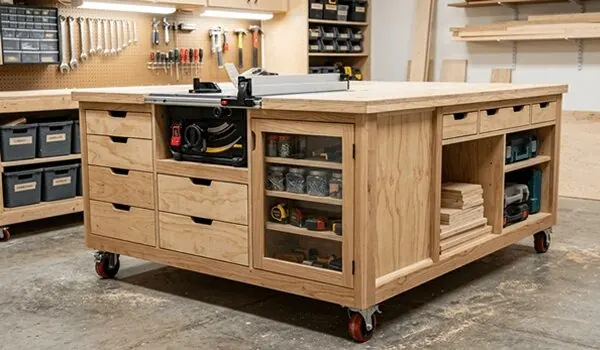
Bench styles
- Simple 2x4 / plywood bench: fast, cheap, strong enough for most hobby work. A great first build.
- Split-top or hybrid bench: adds a vise and dog holes for hand-tool work.
- Traditional joiner's bench: heavy hardwood top, leg vise, the long-term option - more cost and skill.
Getting the height right
A common starting point is to stand with arms straight down and measure to the crease of your wrist - that is roughly a good all-round bench height, often around 34 to 38 inches depending on your build and whether you do more hand or power work. Hand-tool planing favours a slightly lower bench; assembly and power tools favour a slightly higher one.
Benchtop options
- Two layers of MDF or plywood: flat, cheap, easy to replace the top skin when it wears.
- Solid-core door: a shortcut to a flat, heavy top.
- Laminated hardwood (maple, beech): the durable classic, more work and money.
What to look for in a plan
Look for a plan with a clear cutting list, a joinery method you are comfortable with (bolts and lag screws are fine for a first bench), and a base wide enough that the bench does not rack when you plane. Mass is your friend - a bench that skates across the floor is the main complaint about lightweight designs.
Workbench and shop-fixture plans are well represented in the Ted's Woodworking library. If you want to size a bench to your space, the bundled CAD viewer makes that straightforward - just re-derive the cut list afterward.
FAQ
How tall should a workbench be?
Roughly wrist height when standing with your arms down, often 34 to 38 inches. Lower for hand-tool planing, higher for assembly and power tools.
What is the best cheap benchtop?
Two layers of MDF or plywood glued together. It is flat, heavy enough, and you can replace the worn top skin later.
Do I need hardwood for a first bench?
No. A 2x4 base with a doubled sheet-goods top is strong, flat, and cheap. Build a hardwood bench later if you move into hand-tool work.
How heavy should a workbench be?
Heavy enough not to slide when you plane or saw. Mass in the base and top is the fix for a bench that skates.
What length and depth should a workbench be?
A common hobby size is around 5 to 6 feet long and 24 to 30 inches deep. Size it to your space and the longest board you handle.
Do I need a vise?
Not for a first bench used mainly for assembly and power tools. Add a face or tail vise when you move into hand-tool work.
What joinery should the base use?
Bolts and lag screws are fine for a first bench. Mortise-and-tenon is stronger and quieter over the long term.
How do I keep the benchtop flat?
Use two layers of sheet goods or a laminated top, check with a straightedge, and re-flatten or replace the top skin as it wears.
Should the bench have a shelf underneath?
A lower shelf adds rigidity and storage and helps weigh the bench down.
Can I build a bench with only hand tools?
Yes. A basic 2x4 and plywood bench needs only a saw, a drill, and clamps.
More: Shed plans · Furniture plans · Ted's Woodworking review
Want to see what the bundle includes?
One-time payment advertised at $67, with a 60-day money-back guarantee through ClickBank. Prices and bonuses can change, so confirm them on the official page.
Affiliate link to the seller's own website. We may earn a commission at no extra cost to you.