Home › Woodworking plans
Woodworking plans: how to tell a good one from a bad one
Reviewed 30 August 2026 · how we research
A woodworking plan is only useful if it saves you from guessing. Plenty do not. Here is how plans differ, where to find them free and paid, and the checklist that separates a plan you can build from a drawing you cannot.
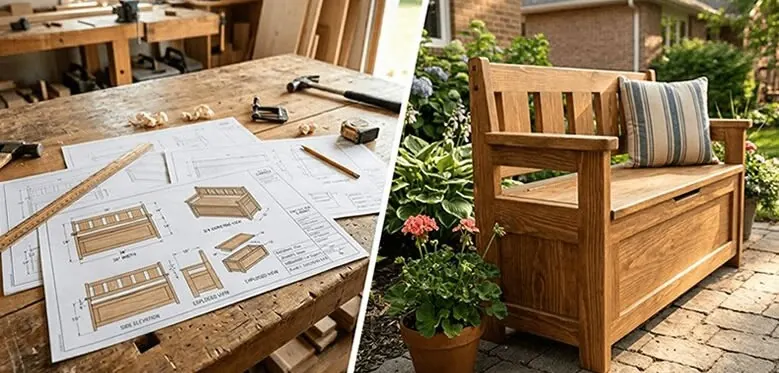
What a good plan actually contains
- A cutting list - every part named, with quantity and finished size
- A materials and hardware list - board feet or sheet count, fasteners, glue, finish
- Dimensioned drawings from more than one view, plus a 3D or exploded view
- An assembly sequence in the order you actually do the work
- Notes on joinery and, for solid-wood pieces, wood movement
If a plan has only a picture and overall dimensions, budget hours to work out the rest yourself.
Free vs paid
Free plans (manufacturer sites, woodworking blogs, library and extension-service PDFs) are great for simple projects and for learning to read drawings. Quality is a lottery and support is nil. Paid plans from established publishers cost more per plan but are usually drafted, tested, and consistent. Bulk plan bundles like Ted's Woodworking sit in between: cheap per plan, huge range, uneven quality - useful as an idea bank you filter.
Common formats
- PDF: the standard. Print at 100% scale and check any printed ruler on the page.
- SketchUp / DWG: editable 3D. You can spin the model and pull your own dimensions. Needs the software.
- Measured drawings from magazines: accurate but you often build the cut list yourself.
Choosing per project
For a birdhouse or a bookshelf, a good free plan is plenty. For a dining table or anything with a wide solid panel, use a drafted plan and still check the cut list and movement details. If you want one place to browse thousands of options, a bundle like Ted's Woodworking works - just expect to sort the good from the filler. Our full review covers how that library holds up.
FAQ
Are free woodworking plans good enough?
For simple projects, yes. Manufacturer sites, blogs, and extension-service PDFs have plenty of solid free plans. For complex furniture, a drafted paid plan is safer.
What format should a woodworking plan be in?
PDF is the standard; print it at 100% scale and verify against any ruler shown on the page. SketchUp or DWG files let you edit and pull your own dimensions.
Is a big plan bundle worth it?
A bundle is cheap per plan and broad, but quality varies and you have to filter. Treat it as an idea bank, not a curated library.
What makes a woodworking plan good?
A cutting list, a materials and hardware list, dimensioned drawings from more than one view, an assembly order, and notes on joinery and wood movement.
How do I read a woodworking plan?
Start with the cutting list and overall dimensions, then match each part to the drawings and assembly steps before cutting anything.
What is a cut list?
A table of every part with its name, quantity, and finished size, used to lay out cuts and buy the right amount of material.
Where can I get free woodworking plans?
Manufacturer sites, woodworking blogs, and library or agricultural-extension PDFs, best for simple projects.
Do I need SketchUp to use a plan?
Only for editable 3D files. PDF plans just need printing at 100% scale.
How do I know if a plan is accurate?
Check that the cutting list adds up to the drawing and that stated board feet match the parts. Test-fit as you go.
Should beginners use paid or free plans?
Free is fine for simple builds. Use a drafted paid plan for anything with a wide solid panel or a structural load.
More: The Ted's Woodworking library · Beginner projects · Furniture plans
Want to see what the bundle includes?
One-time payment advertised at $67, with a 60-day money-back guarantee through ClickBank. Prices and bonuses can change, so confirm them on the official page.
Affiliate link to the seller's own website. We may earn a commission at no extra cost to you.