Home › Outdoor projects
Outdoor woodworking plans: build things that last outside
Reviewed 30 August 2026 · how we research
Garden benches, planters, pergolas, and picnic tables are satisfying projects, but outdoor builds live or die on material choices. Pick the wrong wood or fasteners and a good plan still rots in two seasons.
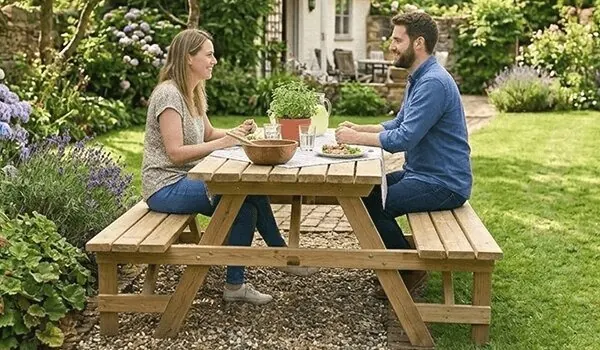
Woods that hold up outdoors
- Western red cedar: light, stable, naturally rot-resistant. The default for garden furniture.
- Cypress: similar durability, often cheaper in the southern US.
- White oak / black locust: very durable hardwoods for pieces that touch the ground.
- Pressure-treated pine: cheapest and rot-proof for structural parts and planter frames - not for food-contact surfaces.
- Teak / ipe: excellent, expensive, hard on tools.
Fasteners and joinery
Use stainless steel or coated exterior screws - plain steel bleeds black stains and fails. For joinery, waterproof (Type II or III) glue, and design so water drains rather than pools: slight gaps between slats, no flat traps, end grain kept off the ground.
Finishes
Options in order of upkeep: leave it to weather grey (least work), penetrating exterior oil (re-apply yearly), or exterior film finish or paint (best protection, peels eventually and is fussy to renew). For planters, line the inside with plastic and leave drainage holes rather than sealing the wood.
Getting plans
Outdoor and garden projects are one of the broadest sections of the Ted's Woodworking library - Adirondack chairs, pergolas, raised beds, potting benches. Match any plan to the wood choices above, and check the cut list before buying cedar, which is not cheap.
FAQ
What is the best wood for outdoor furniture?
Western red cedar is the usual choice: light, stable, and naturally rot-resistant. Cypress is a good-value alternative, and white oak or black locust for parts that touch the ground.
What screws should I use outdoors?
Stainless steel or exterior-coated screws. Plain steel corrodes, weakens the joint, and leaves black stains.
Do I need to finish outdoor projects?
No. Many woods weather to grey safely. A penetrating exterior oil renewed yearly keeps the colour. Film finishes protect best but eventually peel.
Is pressure-treated wood safe for a vegetable planter?
Modern treated lumber is generally considered low risk, but many builders line the inside with plastic or use cedar for food-contact planters.
What glue should I use for outdoor joints?
A waterproof glue rated Type II or Type III, and a design where water drains rather than sits in the joint.
How do I stop outdoor wood from cracking?
Use stable species, seal the end grain, keep pieces off the ground, and expect some checking on thick sections regardless.
Cedar or pressure-treated?
Cedar is lighter, prettier, and naturally rot-resistant but costs more. Treated pine is cheapest and best for structural or ground-contact parts.
How often should I refinish outdoor furniture?
Penetrating oil yearly. Film finishes last longer but eventually peel and need stripping.
Can I leave outdoor furniture unfinished?
Yes. Durable species weather to grey safely. It is a look and maintenance choice.
What is the most durable outdoor finish?
A marine-grade or exterior spar product for film protection, or simply a rot-resistant wood left to weather.
More: Shed plans · Birdhouse plans · Furniture plans