Home › Cabinet plans
Cabinet plans: reading them before you build
Reviewed 30 August 2026 · how we research
Cabinets are boxes with doors - simple in principle, unforgiving in practice because everything must be square and consistent. The plan should remove the guesswork from joinery and hardware.
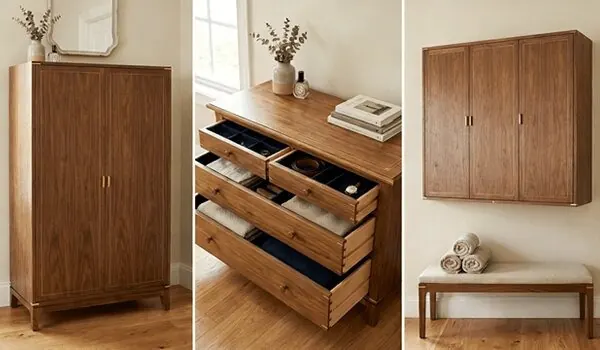
What to expect
Cabinets are mostly straight cuts in sheet goods plus edge treatment. The skill is repeatable accuracy - identical parts, square assemblies - and fitting doors and drawers with even gaps.
What a good cabinet plan plan includes
- A cut list optimised for standard 4x8 sheet goods, with grain direction noted
- Carcase joinery: dados and rabbets, pocket screws, or dowels - and which edges get banding
- Face-frame or frameless (Euro) construction called out clearly
- Door style and a hinge spec (overlay amount, cup hinge boring positions)
- Drawer box method and slide type, with the clearance math done for you
- A hardware and fastener schedule
Key considerations
- Frameless cabinets need more precise cutting; face-frame designs hide small errors.
- Confirm the plan's door gaps and slide clearances match the exact hardware it lists - substituting hinges or slides changes the numbers.
- For kitchens, plan for a separate toe-kick base and a scribe allowance against walls.
Cabinet plans is one category in the Ted's Woodworking library. Match any plan to the points above, whatever the source, and check the cutting list before buying materials. Our review covers how that library holds up overall.
FAQ
What joinery is best for cabinets?
Dados and rabbets, pocket screws, or dowels all work for a carcase. Pocket screws are the most beginner-friendly; dados are stronger and self-aligning.
Face-frame or frameless cabinets?
Face-frame is more forgiving of small cutting errors and easier for beginners. Frameless gives more interior space but demands precise parts and edge banding.
Can I build kitchen cabinets from a plan?
Yes, but plan the whole run: a level base, scribe allowances against walls, consistent door gaps, and hardware bought before you cut so the clearances match.
What sheet good should I use for carcases?
3/4-inch plywood for strength and screw-holding. MDF suits painted doors and panels where weight and moisture allow.
How do I hang a wall cabinet safely?
Into studs with a cleat or cabinet screws rated for the loaded weight, not drywall anchors alone.
What hinge do modern cabinets use?
Concealed cup (Euro) hinges. The plan should give the cup boring position and overlay for the exact hinge listed.
How much gap should there be around doors and drawers?
Small and consistent, typically about 1/16 to 1/8 inch. The plan's clearances assume the specific hardware it names.
Do I need edge banding?
On plywood edges that show, yes, for a finished look and to protect the veneer. Face-frame cabinets hide most edges.
How do I make cabinet parts identical?
Cut with a stop block or a sled so every repeated part is the same length, and check the carcase for square before fastening.
What is a toe kick and do I need one?
The recess at the base of a floor cabinet so you can stand close. Build it as a separate level base the cabinet sits on.
More: Furniture plans · Bookshelf plans · The plan library
Want to see what the bundle includes?
One-time payment advertised at $67, with a 60-day money-back guarantee through ClickBank. Prices and bonuses can change, so confirm them on the official page.
Affiliate link to the seller's own website. We may earn a commission at no extra cost to you.